
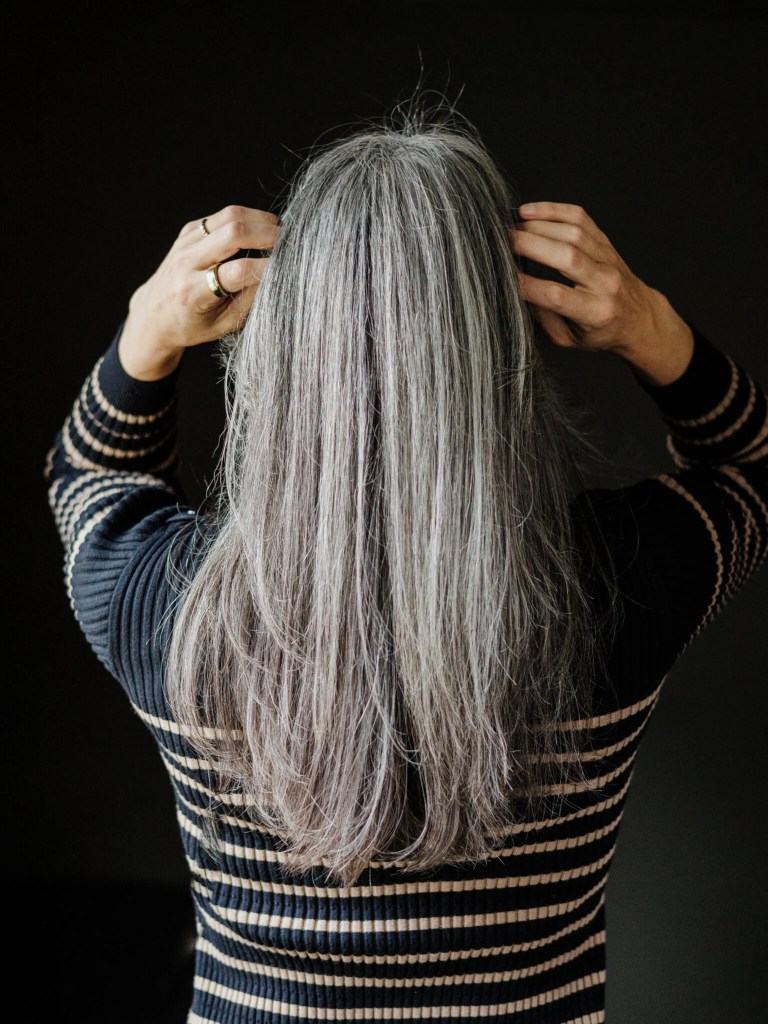
Finding your first silver strand can bring up a lot of questions. Is it stress? Is it aging? Or is it just bad luck? Before you panic and reach for the tweezers, let’s look at the actual science. Gray hair is a natural part of life, but when it happens ahead of schedule, it’s known as premature graying.
What Exactly Counts as “Premature” Graying?
Interestingly, “premature” doesn’t mean the same thing for everyone. The definition changes depending on where you are in the world, driven by the natural density of melanin (the pigment that gives your hair its color) across different ethnicities. According to clinical protocols established in the International Journal of Trichology, the age limits are explicitly classified by racial background:
| Region / Ethnicity | Age Considered Premature |
| Caucasians | Before the age of 20 |
| India & Southeast Asians | Before the age of 25 |
| Africans | Before the age of 30 |
The Common Factors: Why Are You Graying Early?
If your hair is losing its pigment early, it usually comes down to one (or a combination) of these underlying lifestyle, genetic, or environmental factors:
1. Genetics
The timeline for your hair color is largely hardwired into your DNA. As highlighted in comprehensive dermatological guides by the Cleveland Clinic, your genetics dictate the cellular lifespan of your hair’s pigment centers. If your parents or grandparents grayed early, your genes are likely following the same script—even if you live an incredibly healthy lifestyle.
2. Oxidative Stress & The Hydrogen Peroxide Buildup
At a cellular level, premature graying is heavily driven by a chemical mismatch in the skin of the scalp where oxidative stress rises within the hair cells due to a poor lifestyle, smoking, and both physical and mental stress. This accumulation of stress triggers a rapid increase in hydrogen peroxide ($H_2O_2$) levels within the tissue. Normally, our cells rely on a protective enzyme called catalase to destroy this hydrogen peroxide and prevent it from oxidizing the cells, but during premature graying, a critical imbalance occurs. Either the body experiences a sharp decrease in catalase enzyme production, or the hydrogen peroxide levels surge so drastically that the available catalase is completely overwhelmed and insufficient to neutralize the threat. Consequently, a landmark molecular study published in The FASEB Journal proved that this excess, un-neutralized hydrogen peroxide begins to actively destroy the pigment cells (melanocytes), which severely reduces color production in the follicles and causes graying to start.
3. Nutrient Deficiencies
Numerous scientific studies have proven that a deficiency in essential vitamins and minerals directly leads to premature graying, as your hair follicles require these specific raw materials to maintain pigment. Lacking vital nutrients such as Vitamin B12, Vitamin D, folate, iron, and copper can disrupt the hair’s natural coloration process, with copper playing a particularly crucial role because copper ions are required for melanin synthesis and color preservation. The promising aspect of nutrient-related hair changes is that if these underlying deficiencies are caught and corrected on time, the premature graying process can successfully be reversed.
4. Medical Conditions & Childhood Illness
Certain underlying medical conditions and childhood illnesses function as powerful systemic triggers that heavily disrupt normal hair pigmentation. For instance, medical consensus from the Mayo Clinic on Vitiligo and thyroid abnormalities notes that individuals suffering from these issues face significantly higher chances of premature graying due to how these conditions impact the body’s internal immune balance. In a similar manner, experiencing specific health crises during youth, such as severe anemia, malnutrition, or chronic autoimmune diseases, can shock the body’s developing systems and prematurely trigger early graying by damaging or disrupting the delicate pigment-producing units within the hair follicles long before their time.
5. Smoking
Smoking stands out as one of the major lifestyle-driven causes of premature graying, with clinical research indicating a powerful link between tobacco use and the early loss of hair pigment. Peer-reviewed epidemiological data published in the Indian Dermatology Online Journal demonstrates that the likelihood of developing gray hair is significantly higher for smokers compared to non-smokers, pointing to an adjusted risk that is two and a half times greater for those who smoke. This dramatic acceleration of the graying process is primarily attributed to the nicotine found in cigarettes, which introduces a massive load of free radicals into the body and drastically increases oxidative stress within the cells, ultimately damaging and depleting the delicate pigment-producing mechanisms inside the hair follicles.
6. Psychological Stress
Psychological stress serves as a major catalyst for the premature graying of hair, as chronic stress triggers the release of specific systemic hormones and chemical signals that can destroy melanocytes, which play a crucial role in manufacturing hair color. This mechanism is heavily backed by breakthrough scientific research published in the journal Nature by Harvard researchers, whose work demonstrated that intense physiological stress over-activates the sympathetic nervous system, permanently destroying the pigment-producing stem cells housed within the hair follicles. Once these vital stem cells are completely exhausted and gone, the resulting damage is potentially permanent, although clinical evidence suggests that some graying may still be reversible in its very early stages if stress levels are actively reduced before the stem cell reservoir is completely depleted.
7. Hair Dye Allergy
A hair dye allergy represents an external accelerator of hair damage, though it typically happens only if you are explicitly allergic to specific components within hair coloring products. Many cheap dyes on the market contain a chemical called PPD (Para-phenylenediamine), which acts as a powerful pigment developer to darken the hair shaft. When an individual has a topical allergy to this chemical, clinical parameters outlined by the Mayo Clinic on Contact Dermatitis demonstrate that it provokes a localized inflammatory response that actively damages the hair follicle and accelerates a form of premature aging within the hair structure, making it vital to distinguish between safe formulations and cheap, irritating ingredients.
Myth-Busting Corner
Let’s clear the air and debunk some common old wives’ tales:
- Myth 1: Plucking one gray hair makes three more grow in its place.
- Fact: There is zero scientific truth to this. However, plucking can damage the hair follicle permanently, so still skip the tweezers!
- Myth 2: Early graying means you are aging faster overall.
- Fact: There is no connection between the graying of your hair and the biological aging rate of your internal organs.
- Myth 3: Oiling your hair can turn it black again.
- Fact: No oil—herbal, traditional, or otherwise—can resurrect dead or absent melanocytes.
- Myth 4: Hair dye causes more gray hair.
- Fact: As long as you use safe, dermatologist-approved dyes, standard formulations do not harm your pigment cells. Only cheap, harsh chemicals cause damage.
- Myth 5: Sun exposure causes graying.
- Fact: The sun can dry out your hair and ruin its texture, but it does not stop melanin production inside the follicle.
In Part 2, we will dive into what treatments, supplements, and lifestyle changes actually work to manage or reverse graying, and how to safely color your hair without causing damage.


Leave a Reply