
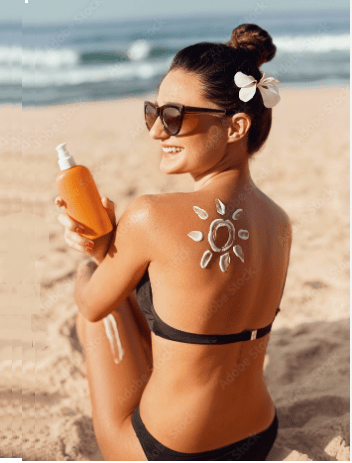
Sunscreen is a crucial part of any skincare routine, yet many of us underestimate its importance. Understanding how the sun affects your skin and the benefits of using sunscreen can help you make informed choices for your skin health.
How the Sun Affects the Skin
The sunlight contain two main types of ultraviolet (UV) rays that impact our skin:
– UVA Rays: Known as “aging rays,” UVA rays penetrate deeply into the skin, contributing to photoaging, wrinkles, and skin cancer.
– UVB Rays: These rays are primarily responsible for sunburn and affect the epidermis (the outer layer of skin). Importantly, UV rays are present even on cloudy days, as they can penetrate through clouds.
Each moment your skin is exposed to the sun contributes to cumulative UV damage, making regular protection essential.
Understanding the UV Index
The UV index is a standardized measurement of the sun’s ultraviolet radiation strength at any given time and location. Here’s a breakdown:
- 0-2 (Low): Minimal sun protection needed.
- 3-7 (Moderate to High): Seek shade and use a sunscreen with an SPF higher than 15.
- 8+ (Very High to Extreme): Extra protection is necessary, especially from late morning to mid-afternoon.
A simple way to gauge UV exposure is by observing your shadow: a shadow shorter than you indicates high UV exposure.
The Importance of Sunscreen
Everyone, regardless of age, gender, or race, needs sunscreen year-round. Here are some key benefits:
– Prevents Skin Cancer caused by UV rays
– Reduces Signs of Aging
– Protection from Sunburn
– Minimizes of Hyperpigmentation and Melasma
What to Look for in Sunscreen
1. SPF (Sun Protection Factor): Indicates the level of protection against UVB rays. For example:
– SPF 15: Blocks about 93.3% of UVB rays.
– SPF 30: Blocks about 96.7%.
– SPF 50+: Blocks about 98%.
2. PA Rating: This measures protection against UVA rays. The more plus signs, the better the protection:
– PA+: 40-50% UVA protection
– PA++: 50-90% UVA protection
– PA+++: 90% UVA protection
– PA++++: 95% UVA protection
3. Broad Spectrum: A label indicating that the sunscreen protects against both UVA and UVB rays.
Types of Sunscreen
1. Mineral (Physical) Sunscreen: Contains zinc oxide or titanium dioxide, reflecting UV rays. It’s less likely to irritate and often leaves a matte finish but may leave a white cast.
2. Chemical Sunscreen: Often has a lighter feel and no white cast. It absorbs UV rays and converts them to heat. Ingredients include oxybenzone, avobenzone, and others.
3. Hybrid Sunscreen: Combines both physical and chemical filters, providing effective protection with a pleasant texture.
Choosing the Right Sunscreen
Select a sunscreen that suits your skin type and texture preference. Consistent use is an investment in your skin’s long-term health.
How to Apply Sunscreen
1. Cleansing: Start with a clean face, pat dry, and apply toner.
2. Moisturizing: Apply a suitable face serum and let it absorb.
3. Sunscreen Application: Use the “two-finger rule” to apply a generous amount over your face and neck. Don’t forget sun-exposed areas of your body.
4. Timing: Apply sunscreen 15 minutes before going outdoors, and reapply every four hours, especially after swimming or sweating.
In short
Sunscreen is a vital part of skincare that should be used daily, regardless of the weather. By understanding the different types of UV rays, the importance of SPF and PA ratings, and how to properly apply sunscreen, you can effectively protect your skin from damage. Make sunscreen a non-negotiable part of your routine and enjoy healthier, more radiant skin for years to come!
 Glory Aesthetics